The Kansas City Chiefs have already entered the offseason with calculated aggression, reshaping their coaching staff and preparing for potential roster adjustments that could redefine the next chapter of their championship window.
As the start of NFL free agency approaches, speculation has intensified regarding whether Kansas City might explore a blockbuster move involving one of its most valuable defensive assets.
At the center of that speculation stands All Pro cornerback Trent McDuffie, a player whose on field excellence contrasts sharply with the uncertainty surrounding his contractual future.

With no long term extension finalized and the franchise historically cautious about allocating top tier money to cornerbacks, the possibility of a trade has evolved from fringe theory into legitimate offseason discourse.
That conversation gained national traction when ESPN analyst Bill Barnwell introduced a provocative proposal that would send McDuffie west to the Los Angeles Rams.
In his February 16 feature outlining eleven trades that “fit for both teams,” Barnwell argued that Kansas City’s front office has already established precedent for bold defensive back transactions.
He referenced prior deals involving former Chiefs cornerbacks Marcus Peters and L’Jarius Sneed, suggesting general manager Brett Veach is not afraid to extract value rather than risk losing elite talent for minimal compensation.
Under Barnwell’s proposed framework, Kansas City would send McDuffie and a 2026 fifth round pick to Los Angeles in exchange for the Rams’ 2026 first round selection, projected at No. 29 overall.
Such a move would immediately equip the Chiefs with three top forty selections in the upcoming draft, dramatically enhancing roster flexibility and strategic maneuverability.
Barnwell emphasized that while McDuffie is arguably superior to both Peters and Sneed at similar stages, the economics of roster construction cannot be ignored.
He noted that if Kansas City does not intend to extend its premier cornerback, securing a significant return now would be far more prudent than settling for a distant compensatory pick.
The logic is grounded in cold asset management rather than emotional attachment, particularly within a franchise that has consistently prioritized sustainable roster cycles over sentiment.
Barnwell also highlighted a revealing statistic regarding Kansas City’s financial philosophy at cornerback since 2018.
During that span, the Chiefs have spent just $112.2 million in cash at the position, ranking as the third lowest total in the league.
That number underscores a clear organizational tendency to avoid committing elite market money to defensive backs, regardless of individual performance levels.
McDuffie’s current fifth year option carries a $13.6 million cap hit, a figure that appears entirely reasonable relative to his production and versatility.
However, the looming question concerns what his next contract would demand in an evolving market that increasingly rewards shutdown coverage ability.
According to Over The Cap projections, the top tier of cornerback contracts now exceeds $24 million annually, with elite players commanding even higher valuations.
Sauce Gardner leads the market at approximately $30 million per year with the Indianapolis Colts, reflecting the premium placed on true shutdown defenders.
Close behind is Derek Stingley Jr. of the Houston Texans, whose contract similarly pushes the $30 million threshold.
Jaycee Horn of the Carolina Panthers commands $25 million annually, reinforcing the upward trajectory of elite defensive back salaries.
Veteran star Jalen Ramsey now with the Pittsburgh Steelers earns $24.1 million per year, while Patrick Surtain II of the Denver Broncos sits at $24 million annually.
Given McDuffie’s résumé, league insiders widely expect his market to approach those financial ballparks, particularly after earning first team All Pro honors and multiple Super Bowl rings.
Statistically, his case is compelling and difficult to dismiss.
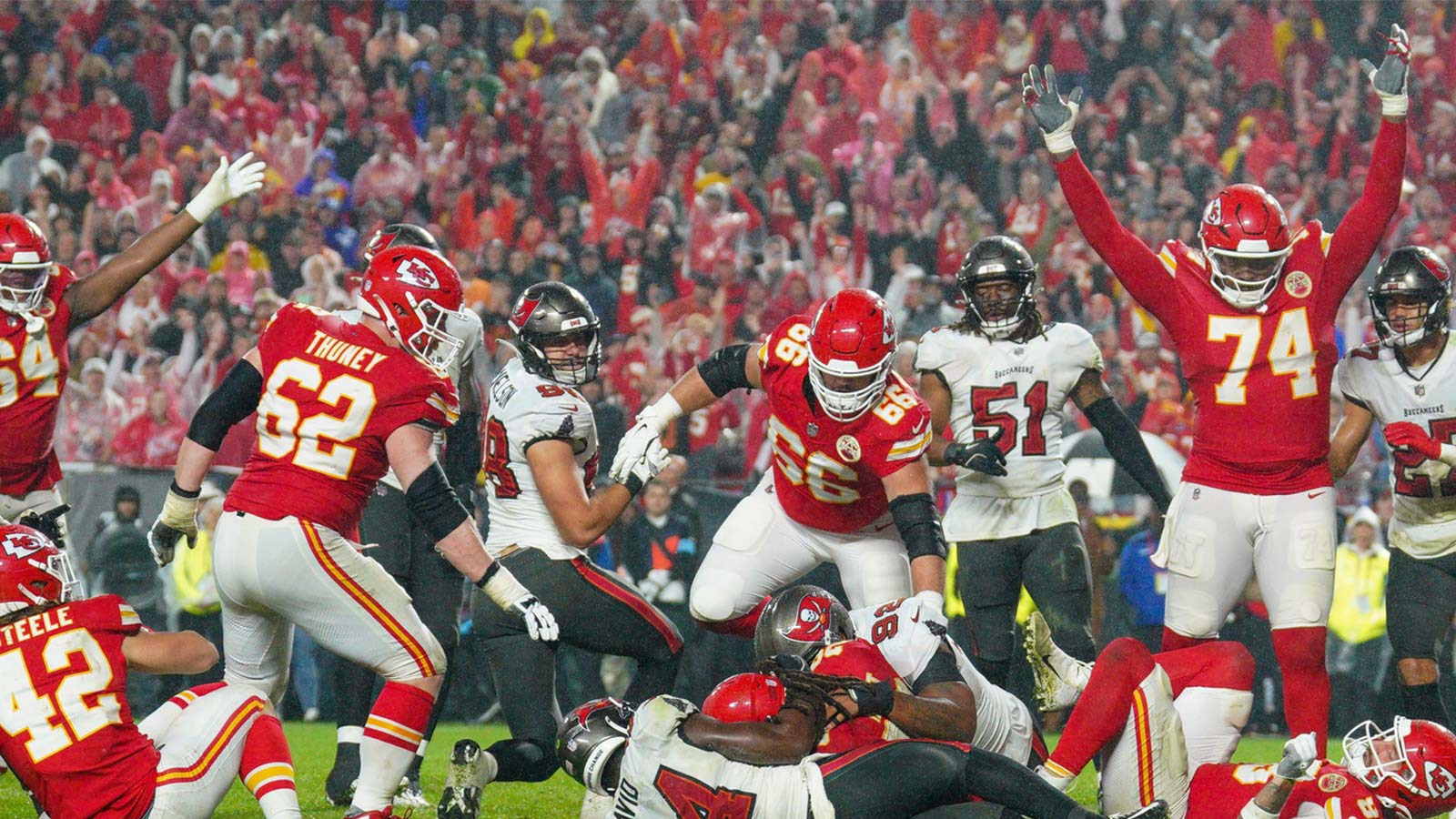
Over each of the past two seasons, McDuffie has surrendered just 6.1 yards per target, a figure that places him among the most efficient coverage defenders in professional football.
His alignment versatility further strengthens his value proposition, with over 2,000 career snaps logged in the slot and nearly 900 additional snaps played on the boundary.
While some evaluators argue he is at his absolute best inside, his ability to function effectively as an outside corner significantly broadens his schematic appeal.
That hybrid capability makes him especially attractive to teams seeking flexibility against modern offenses that frequently deploy X style receivers capable of dictating matchups.
Beyond coverage metrics, McDuffie’s physicality adds another dimension to his profile.
Pro Football Focus credits him with missed tackle rates below nine percent and at least twenty defensive stops in both the 2024 and 2025 campaigns.
Under defensive coordinator Steve Spagnuolo, McDuffie has also thrived as a situational blitzer, showcasing timing, acceleration, and football intelligence rarely seen at his position.
He has proven to be a true jack of all trades, seamlessly transitioning between coverage responsibilities, run support, and pressure packages without compromising efficiency.
That multidimensional skill set inevitably inflates his market value, particularly in a league increasingly reliant on disguise and pre snap versatility.
From Kansas City’s perspective, however, the calculus extends beyond talent evaluation into broader championship sustainability.
The Chiefs must carefully weigh whether allocating upward of $25 million annually to one defender aligns with their long term cap architecture.
They must also consider future extensions for core players and the ripple effects such a deal would generate across positional spending priorities.
Trading McDuffie now would represent a bold but rational acknowledgment of financial limits rather than a dismissal of his contributions.
It would also mirror the strategic aggression that originally landed him in Kansas City, as the Chiefs acquired McDuffie by maneuvering with draft capital obtained in the Tyreek Hill trade.
There is an undeniable irony in potentially repeating that asset conversion cycle once more.
Still, parting with a proven defensive cornerstone carries inherent risk, especially for a team intent on maintaining elite status within a brutally competitive conference.
McDuffie has been a stabilizing presence in high leverage postseason moments, displaying poise under pressure and delivering consistent performance on football’s grandest stages.
Replacing that reliability with draft capital introduces uncertainty, even if history suggests Kansas City drafts and develops secondary talent effectively.
Ultimately, someone in the league will commit massive resources to securing McDuffie’s prime years.
If that organization is not the Chiefs, maximizing trade value before contractual expiration may represent the most pragmatic course of action.
For now, the speculation remains theoretical but increasingly grounded in financial realism rather than fantasy.
The coming weeks will determine whether Kansas City views McDuffie as a foundational pillar worth premium investment or as a valuable asset whose peak return window has arrived.
Until clarity emerges, one truth stands firm: Trent McDuffie’s future will significantly influence the trajectory of the Chiefs’ defense and perhaps their broader championship ambitions.
🚨 JUST IN: Dismissed as “just a comedian,” Adam Sandler delivers an unscripted moment that freezes live television in its tracks ⚡. BH
A Fictional Media Flashpoint That Exposed a Cultural Nerve
The laugh track never came.
Adam Sandler was mid-sentence when the interruption hit—sharp, dismissive, and loud enough to carry past the studio lights and into living rooms across the country.
“He’s just a comedian,” the panelist snapped. “Let’s keep this serious.”
For a full three seconds, live television froze.

The host stared at his notes. The camera lingered on Sandler’s face, waiting for a joke—any joke—to defuse the moment. None came. The audience shifted, uncertain whether to clap or hold its breath.
And then Sandler did something no one expected.
He nodded.
“Okay,” he said quietly. “Then let me be serious for a second.”
The control room panicked. And in this fictional retelling, live television would never quite recover.
A Segment Built to Be Safe
The broadcast was supposed to be routine: a primetime roundtable on “culture and responsibility,” booked carefully to avoid confrontation. Sandler’s role was decorative—comic relief between experts, a familiar face to keep ratings warm.
Producers believed the formula was foolproof.
“He’d crack a line, the panel would move on, and everyone would feel smart without getting uncomfortable,” said one fictional staffer later.
That illusion shattered the moment Sandler refused to retreat behind humor.

The Line That Triggered the Shutdown
The tension escalated when the discussion turned to public influence—who has it, who deserves it, and who should stay quiet. A commentator dismissed entertainers weighing in on civic issues as “noise.”
That’s when Sandler spoke up.
“I don’t think caring disqualifies you,” he said. “I think pretending not to care does.”
The panelist rolled their eyes. Then came the line:
“He’s just a comedian.”
The phrase—meant to close the argument—did the opposite. It crystallized the unspoken hierarchy in the room: expertise versus experience, permission versus presence.
Sandler looked at the host, then back at the panel.
“I’ve been called worse,” he said. “But if ‘comedian’ means I don’t get to notice what’s happening to people, then we’re using the word wrong.”
Live TV Loses the Script
May you like

Behind the scenes, producers scrambled. The director whispered about cutting to commercial. Legal flagged “unscripted risk.” The host attempted a pivot.
“Sandy, let’s keep it light,” the host said.
Sandler shook his head.
“No,” he replied. “This is the light.”
The audience fell silent. The studio—designed for noise—was suddenly too quiet.

A Monologue Without a Punchline
In this fictional account, Sandler didn’t rant. He didn’t accuse. He spoke in measured sentences that felt heavier because they weren’t sharpened for applause.
“I make people laugh for a living,” he said. “But laughing doesn’t cancel out noticing when something’s off. If anything, it makes you more responsible to say it clearly.”
A panelist tried to interrupt. Sandler raised a hand—not aggressively, just enough.
“Let me finish,” he said.
Gasps rippled. The host looked helpless. The red light stayed on.
The Moment That Went Viral
The line that stopped the show—and launched a thousand clips—came next:
“If ‘just a comedian’ is the fastest way to dismiss someone, maybe it’s because comedians are used to saying things out loud before everyone else is ready to hear them.”
No music. No applause. Just the sound of a studio realizing it had lost control.
Within minutes of airing, the clip surged across platforms. Headlines followed: SANDLER SHUTS DOWN PANEL, LIVE TV MOMENT GOES OFF THE RAILS, WHEN COMEDY TURNED SERIOUS.

Backlash, Instantly
Reaction split cleanly down the middle.
Critics accused Sandler of overstepping, of hijacking a serious conversation, of confusing popularity with authority. “Entertainment is not expertise,” one fictional columnist wrote.
Supporters saw something else.
“He didn’t claim expertise,” argued another commentator. “He claimed humanity.”
What unsettled media insiders wasn’t the disagreement—it was the posture. Sandler didn’t apologize. He didn’t soften. He didn’t ask permission.
“He just stayed there,” said a fictional producer. “That’s what scared people.”
Hollywood’s Private Reckoning
In the imagined aftermath, studio executives debated whether the moment was reckless or revelatory. Talent agents fielded nervous calls. Publicists warned clients to “stay in lane.”
But the lane itself was under scrutiny.
“This exposed an old rule,” said a fictional media analyst. “That entertainers are allowed to reflect culture, but not question it.”
Sandler’s refusal to accept that boundary turned a single exchange into a referendum.
No Walk-Back, No Cleanup

True to form in this fictional telling, Sandler declined follow-up interviews. No apology. No clarification thread. When asked by a reporter off-camera if he regretted the moment, he shrugged.
“I regret not saying things sooner sometimes,” he said.
That was all.
Why This Moment Lingered
Live television thrives on control. On beats. On predictability. What happened that night broke the rhythm—not with chaos, but with calm refusal.
“He didn’t raise his voice,” noted a fictional cultural critic. “He raised the temperature by staying still.”
The phrase “He’s just a comedian”—once meant to dismiss—became shorthand for something else entirely: the fear of voices that don’t fit neatly into categories but still resonate.
An Ending Without Resolution
The show eventually cut to commercial. The host thanked the panel. The credits rolled.
But the moment didn’t end.
It replayed on phones, in group chats, on morning shows. Not because it answered a question—but because it exposed one:
Who gets to speak seriously—and who decides when a conversation is over?
In this fictional account, Adam Sandler didn’t demand the microphone.
He refused to put it down.
And for a few unscripted seconds on live television, that refusal was loud enough to stop everything cold.