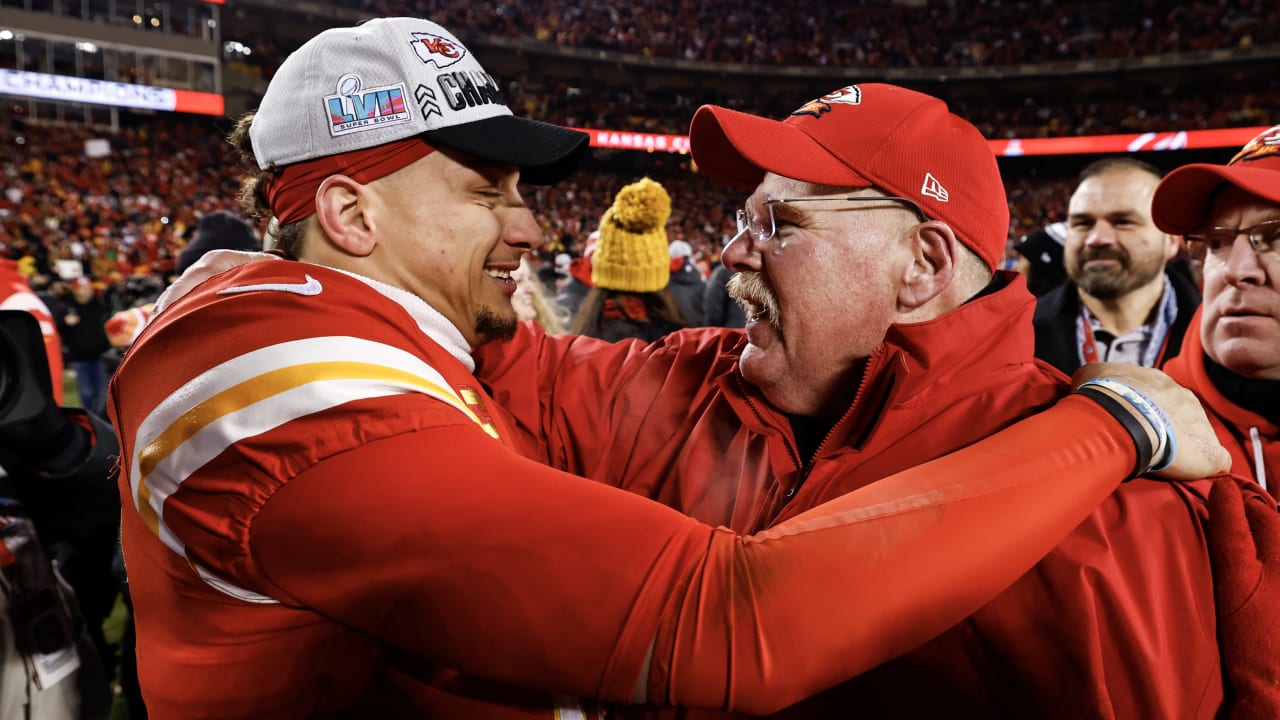
In a moment that instantly set the sports world ablaze, Kansas City Chiefs head coach Andy Reid delivered a blazing, impassioned defense of his star quarterback, Patrick Mahomes, after fresh waves of criticism hit the three-time Super Bowl MVP. With unmistakable passion and a tone rarely seen from the usually composed coach, Reid declared that the increasingly harsh backlash aimed at Mahomes’ recent play is “practically a crime against football,” a dramatic comment that has fans reeling and pundits scrambling for context.
The explosive statement came during a routine press conference following the Chiefs’ narrow victory, a game that saw the team struggle offensively and Mahomes himself face intense scrutiny over errant throws and a perceived dip in his signature magical playmaking. The criticism hitting Mahomes is two-fold: a recent slump in statistical efficiency, marked by a higher-than-usual turnover rate, and the growing narrative among outside observers that he has become overly reliant on the Chiefs’ dominant defense.
When a reporter phrased a question suggesting Mahomes’ play was trending downward, Reid’s response was immediate and forceful. He cut the question short, his eyes fixed firmly on the press corps.
“Listen, let me stop you right there,” Reid began, leaning into the microphone. “The things I’m reading and hearing about Patrick right now—it’s disrespectful. It’s absolutely disrespectful to what this man has accomplished, to his talent, and to the way he prepares every single week. To question his greatness based on a handful of plays or a short stretch… it’s practically a crime against football.“
The phrase, “a crime against football,” instantly became the headline, encapsulating the deep sense of betrayal and protective fury that Reid clearly feels for his franchise cornerstone.
The Root of the Uproar

The recent firestorm around Mahomes intensified after a few close games where the quarterback’s statistics were pedestrian by his own Hall-of-Fame standards. Analysts pointed to his uncharacteristic struggles in the intermediate passing game and a few crucial, high-profile interceptions. These observations fed into a larger, often whispered narrative: that the dynasty is beginning to fade and Mahomes is not the untouchable figure he once was.
Reid made it clear he views this assessment not as valid criticism, but as lazy analysis and opportunistic negativity.
“This is the greatest quarterback I have ever had the privilege to coach, and I’ve coached some great ones,” Reid continued, his voice steadying but no less intense. “You think opposing defensive coordinators have forgotten what he can do? They are devoting their entire game plan to stopping him. And he is still finding ways to win, to put us in a position to be successful, even when our entire offense isn’t firing on all cylinders.”
The coach emphasized that judging Mahomes solely on his statistical output during a season where the entire offensive supporting cast has faced growing pains, particularly at the wide receiver position, is a fundamental misunderstanding of the game.
“He carries the burden of knowing every eye is on him,” Reid said. “The expectation that he has to deliver a miracle every drive is the unfair part. The man is still a magician. Let the team catch up to him. We’ll be fine. And to the people questioning him: you are missing the best part of this game.”
Reid’s explosive statement serves as a powerful shield, protecting Mahomes from the psychological toll of the media cycle and affirming the organization’s unwavering faith in him. It was a declaration of war against the narrative, reminding the NFL world that the bond between the coach and his quarterback remains rock-solid, and that any attack on Mahomes is an attack on the Chiefs dynasty itself.