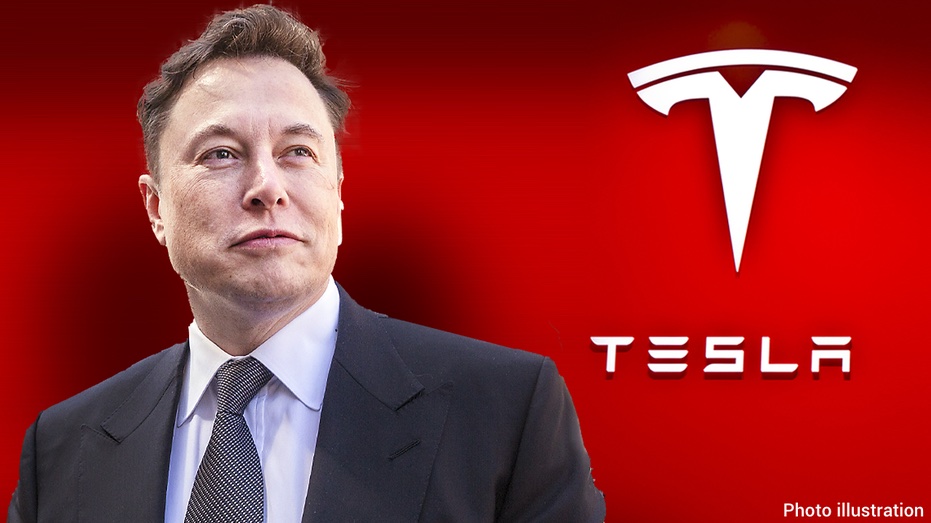
Elon Musk has done it again — this time not with a rocket launch, a groundbreaking invention, or a viral social media moment, but with one of the largest executive payouts in corporate history
. In a move sending shockwaves through Wall Street, Silicon Valley, and social media, Tesla’s board has approved a jaw-dropping $24 BILLION compensation package for its CEO.That number is not a typo.
It’s real — and it’s bigger than the combined annual profits Tesla reported across 2022 and 2023.Immediately, headlines exploded across the globe:
“Record-Breaking.”
“Unprecedented.”
“Corporate Madness.”
“A Reward for the Impossible.”
Depending on who you ask, Musk’s historic windfall is either capitalism at its finest — or a sign the system has spiraled out of control.
Here’s how it happened… and why the world can’t stop talking.
THE BONUS THAT BROKE THE INTERNET
The $24 billion payout stems from a controversial, performance-based compensation deal Tesla shareholders approved years earlier — a plan tied to aggressive milestones in revenue, market cap, and operational growth.
The plan was so bold at the time that analysts labeled it:
- “Impossible.”
- “A fantasy target.”
- “Mathematically unrealistic.”
But Musk hit every milestone.
Then he hit the next ones.
And then he obliterated expectations entirely.
Tesla went from a struggling EV startup to:
- the world’s most valuable automaker
- a global renewable energy powerhouse
- a leader in AI and robotics
- a cornerstone of modern transportation
Love him or hate him — Musk delivered. And the payout reflects that.
Still… $24 billion in a single compensation event is a figure most Americans can’t even grasp.
THE WORLD REACTS — OUTRAGE, PRAISE, AND PURE SHOCK
Within minutes of the announcement, X (formerly Twitter) melted down.
Hashtags soared:
Celebrities, economists, politicians, financial analysts — everyone had an opinion.
THE CRITICS (LOUD AND ANGRY)
Many called the bonus “offensive,” “irresponsible,” and “a sign of broken corporate ethics.”
Progressive lawmakers blasted the move within minutes, arguing that no CEO should earn a bonus larger than the GDP of some small countries.
One senator posted:
“No one needs $24 billion. This is capitalism at its most grotesque.”
Activist groups accused Tesla of rewarding “wealth concentration” and ignoring worker concerns.
THE SUPPORTERS (JUST AS LOUD)
Tesla investors and Musk loyalists fired back with equal intensity.
Their argument: Musk’s innovation created trillions in value, millions of jobs, and an entire global industry.
One shareholder wrote:
“He turned Tesla from nothing into the most transformative company on Earth. Pay the man.”
TESLA STOCK WHIPLASHES
The market reacted instantly — and wildly.
At opening bell:
- Tesla stock jumped as bullish investors celebrated the milestone.
- Then it dipped sharply as critics called the compensation “reckless.”
- By midday, it stabilized, reflecting the polarized sentiment surrounding the company.
Several analysts agreed on one thing:
“This is the most divisive corporate payout in modern history.”
WHY THE PAYDAY IS SO MASSIVE
The compensation package wasn’t salary.
Musk actually takes no salary from Tesla at all.
Instead, the entire $24 billion comes from:
- stock options
- performance milestones
- long-term evaluation metrics
- Tesla’s unprecedented market expansion
In essence, Musk gets paid only when Tesla wins — and Tesla has won, repeatedly, on a global stage.
According to Tesla’s board:
“Musk’s leadership produced enterprise value unmatched in modern markets.”
They argue that his vision — EV dominance, reusable rockets, AI, robotics, energy storage — has reshaped the future of multiple industries, not just automobiles.
THE BIG QUESTION: DOES HE DESERVE IT?
That debate is now raging worldwide.
Here are the two sides:
THE CASE AGAINST
- No CEO should earn more than entire countries.
- Tesla factory workers do not see comparable benefits.
- The wealth gap widens with every billion.
- Extreme compensation packages distort markets.
- Shareholders may suffer dilution.
THE CASE FOR
- The payout was agreed upon years ago, tied to “impossible” goals.
- Musk delivered more value than any CEO in modern history.
- Tesla’s success created trillions in wealth and millions of jobs.
- Innovation at this scale deserves unmatched reward.
- The bonus is performance-based, not guaranteed.
Both arguments carry weight — which is exactly why this story is dominating global conversation.
MUSK BREAKS HIS SILENCE
After hours of speculation, Musk finally responded on X with classic understatement:
“I only get paid when Tesla wins.”
The post racked up millions of impressions in minutes.
Later, he followed with a second line:
“Back to work.”
Supporters praised the humility.
Critics rolled their eyes.
But no one looked away.
THE IMPACT: A NEW ERA FOR CORPORATE COMPENSATION
Economists say this moment will reshape executive pay across industries.
Some predict:
- regulatory hearings
- shareholder rebellions
- new performance-based compensation norms
- copycat packages for visionary CEOs
- massive public debates over billionaire wealth
Others argue that Musk’s payout simply reflects a hard truth:
The world values innovation — and innovators get rewarded.
WHAT HAPPENS NOW?
The $24 billion payday is set to be finalized over the next year, pending routine filings and shareholder reports. Tesla will continue scaling production, expanding AI development, and preparing the launch of the new Roadster, Robotaxi, Optimus, and next-gen Gigafactories.
Whether you cheer or criticize, one thing is undeniable:
Elon Musk now holds the largest single-year CEO payout in history.
By a mile.
And the world will be talking about this moment for decades.
This isn’t just a bonus.
This is a shockwave.
A turning point.
A historic recalibration of what one person can earn in an era defined by innovation.
Love him or hate him —
Musk just changed the game again.
Leon Crane: 84 Days of Survival in Alaska’s Frozen Wilderness
On December 21, 1943, 25-year-old Lieutenant Leon Crane’s life changed in an instant. Serving as the co-pilot of a B-24 Liberator bomber, he watched in horror as the aircraft spiraled out of control at 25,000 feet over Alaska. Moments later, the bomber crashed into a mountain near the Charley River, killing every crew member but Crane. He had parachuted to safety—but “safety” was relative. Alone, injured, and unprepared, he found himself stranded in one of the harshest environments on Earth.
Crane had only a Boy Scout knife, a few matches, and his parachute. The temperatures were far below zero, the snow was deep, and death lurked in every direction. His ordeal would last 84 days—nearly three months of frostbite, starvation, and isolation that tested the limits of human endurance.
At first, Crane survived on little more than snow and water. He had no food and no shelter beyond the thin protection of his parachute. Each day was a battle against freezing winds and the creeping exhaustion that came from hunger. Still, he pressed on, moving across the frozen wilderness with nothing but instinct and determination.
His luck turned when he stumbled upon a trapper’s abandoned cabin. Inside, he found matches, a rifle, and a few supplies. These meager items became lifelines. He learned to make fire, scavenge what food he could, and keep himself alive a little longer. Yet the wilderness was merciless. He fell through ice, risked hypothermia daily, and suffered frostbite, but refused to give in.
Over the next weeks, Crane trekked an estimated 120 miles across frozen rivers and mountain passes. Each step carried him further from the crash site, further from despair, and closer to survival. He had no map, no compass—only an unyielding will to keep moving, no matter the cost.
Finally, on March 10, 1944, after 84 grueling days, Crane stumbled upon another remote cabin. This time, it was not abandoned. A trapper’s family took him in, sheltered him, and alerted authorities. Against all odds, the young lieutenant who had walked out of the sky and into one of the deadliest environments on Earth had survived.
Crane’s story quickly became legend—not because he sought fame, but because his survival embodied resilience and grit. He endured what few could imagine, refusing to surrender to the wilderness that had already claimed his comrades.
His ordeal remains one of the greatest survival stories of World War II, a testament to the strength of the human spirit when pushed to its very edge. How many could endure 84 days alone, facing frostbite, hunger, and isolation, and live to tell the tale? Leon Crane did—and his name endures as a symbol of unbreakable will.
🌲 Lest We Forget. 🌲