It was past 900 p.m. on November 29th, 2025. Kansas City was quiet. The streets near UMKC wrapped in that soft hush only college towns know on a Saturday night. Half asleep, half wide awake with dreams. Inside a blacked out SUV, two of the most watched people on the planet were just tired.
Taylor Swift, eyes heavy from hours of cheering in the stands. Travis Kelce bodies still humming with the echo of tackles and fourth down calls. They weren’t looking for cameras. They weren’t looking for fans. They were looking for silence. Taylor turned to Travis at a red light, her voice barely above a whisper. You know what sounds perfect right now? Really good coffee and somewhere we can just be without football, without fame, without the world watching.
Travis smiled faintly. I know exactly the place. 10 minutes later, they stepped into the Common Grounds Cafe. Dim lights, chalkboard menus, the scent of roasted beans, and old paperbacks hanging in the air, almost empty, just a few students buried in textbooks. And behind the counter, her Maya, early 20s, dark hair pulled back, eyes sharp, calm, like she’d seen chaos and decided not to flinch.
When she looked up and saw them, her breath caught just for a second, but she didn’t gasp. didn’t pull out her phone, didn’t freeze, she simply said, “Good evening. What can I get started for you?” Taylor ordered a vanilla latte. Travis asked for black coffee, strong, no frills. And as Maya moved with quiet precision behind the espresso machine, something felt off.
Not wrong, but different. This wasn’t starruck awe. This wasn’t panic or performance. This was presence. And in that moment, neither Taylor nor Travis knew it yet. But they hadn’t just walked into a coffee shop. They’d stepped into a classroom. And the teacher, she was about to change everything they thought they knew about struggle, strength, and what it really means to thrive.
If stories like this, real, raw, and quietly revolutionary, move you, hit subscribe because we don’t just chase headlines here. We uncover the moments that shift perspectives. The kind that stay with you long after the screen goes dark. The coffee shop was quiet. Just the soft clink of ceramic, the whisper of pages turning, the low hum of a laptop fan.
Taylor took a slow sip of her latte. Travis cradled his black coffee like it might steady the last tremors of game day adrenaline still running through him. Then Maya spoke again, casually like she was sharing the weather. Great game today, Travis. You guys looked really sharp out there. Taylor glanced at her, surprised, not by the compliment, but by the calm in her voice.
No flutter, no fanfare, just genuine interest. “Are you a big football fan?” Taylor asked. Maya smiled as she wiped down the espresso wand. “I try to catch the games when I can, but between school and work, my schedule gets pretty crazy.” And then she said it so matterofactly, it almost slipped past them. I work three jobs. Travis blinked.
Three? Yeah, she said, not looking up. This cafe about 25 hours a week, overnight shifts at the children’s hospital on weekends, and I babysit for a few families when I can squeeze it in. Taylor’s chest tightened. That wasn’t just busy. That was survival. How do you manage without burning out? Taylor asked, voice softer now.
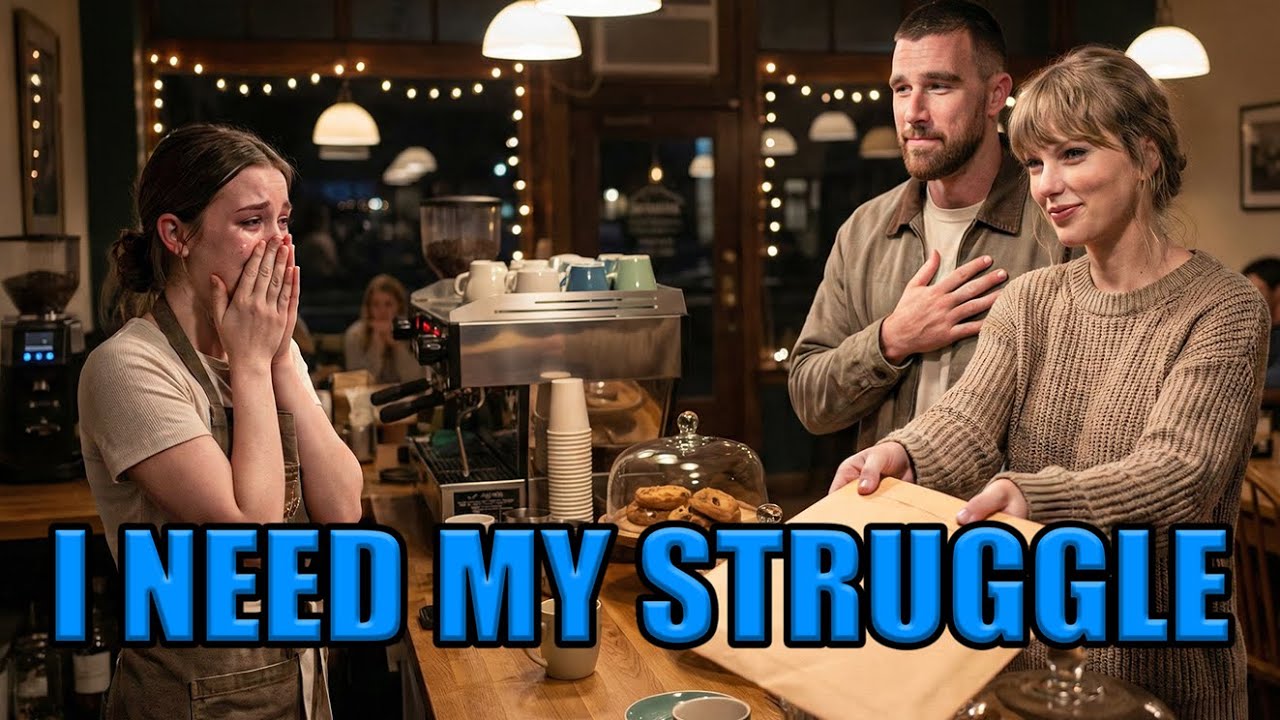
Maya paused, looked up, and in that look, there it was. Not exhaustion, not resentment, clarity. She leaned against the counter. Most people assume this life must be miserable, she said. But honestly, it’s taught me more about human psychology than any textbook ever could. The room seemed to still.
She wasn’t just working to pay bills. She was studying in real time, watching how students coped with stress at 2 am. How nurses held families together in hospital hallways at 3:00 a.m. How children processed fear, joy, loss while she changed diapers and read bedtime stories. Her life wasn’t a burden. It was a laboratory. And suddenly, Taylor and Travis weren’t just famous customers anymore.
They were students. But here’s the twist no one expected. Maya wasn’t just observing resilience. She was building it deliberately daily, turning pressure into purpose. And that’s when things shifted from admiration to revelation. Taylor leaned forward, her elbows on the worn wooden counter, her celebrity armor completely gone.
What do you mean your work is teaching you more than your classes? Maya’s eyes lit up, not with pride, but with passion, the kind you can’t fake, the kind that comes from living what you believe. In grad school, we talk about posttraumatic growth, she said, voice steady, but animated. Not just how people break under pressure, but how some actually grow because of it.
Travis, still in his game day sweatshirt, tilted his head. So, you’re saying your three jobs aren’t dragging you down, they’re building you up? Exactly. Maya said, “When I’m here at midnight making coffee for students pulling all-nighters, I’m watching stress responses unfold in real time. Who shuts down? Who leans on friends? Who cracks a joke to lighten the room?” She gestured toward the empty cafe.
When I’m cleaning hospital rooms at 3:00 a.m., I see how healthare workers hold space for grief hour after hour without losing their compassion. That’s not just endurance. That’s emotional intelligence in action. Then quieter. And when I’m babysitting, I watch kids navigate big feelings with tiny vocabularies.
They don’t have therapists. They have moments. And in those moments, they learn resilience. or they don’t. Taylor’s breath caught. This wasn’t theory. This was frontline psychology, raw, unfiltered, and happening in the margins of a life most would call struggling. So your whole life, it’s like a case study, Taylor asked.
It’s better than a case study. It’s lived truth. Textbooks tell you what stress looks like from the outside. I know what it feels like from the inside and how to use it. Travis shook his head half in awe, half in realization. In football, we call it mental toughness, but you’re talking about something deeper, something chosen. Maya nodded.
Mental toughness sounds like gritting your teeth and white knuckling through. But what I’m describing is mental flexibility. The ability to look at your circumstances and say, “This is hard, but what can it teach me?” The words hung in the air like steam off fresh coffee. Taylor felt something shift inside her, like a locked door creaking open.
All those years of writing songs about heartbreak, scrutiny, reinvention. She’d always framed pain as something to escape. But what if it was something to enter, to understand, to alchemize? And that’s when Maya said the one thing no one saw coming. Not a plea, not a complaint, but a quiet declaration that would echo far beyond that cafe.
The offer came quietly, almost instinctively, after an hour of conversation that had drifted from coffee orders to the very nature of human resilience. Taylor and Travis exchanged a look. It wasn’t rehearsed. It wasn’t performative. It was pure instinct. We can fix this. Travis cleared his throat.
his voice still rough from the game, but softened by something deeper ow. “Maya,” he said, leaning forward on the counter. “What if we told you you didn’t have to work three jobs anymore?” Taylor followed quickly, her tone warm, earnest, like she was offering more than money. She was offering relief. We’d really love to help so you can focus on your studies, on becoming the psychologist you’re meant to be without burning yourself out just to survive.
In any other story, this would have been the happy ending. The generous stars sweep in, erase the struggle, and the hardworking girl gets her welldeserved peace. But Maya didn’t reach for her phone, didn’t whisper, “Thank you,” through happy tears, didn’t even blink. Instead, she looked down at her hands.
Hands that had scrubbed hospital floors at 4:00 a.m., wiped children’s tears, steamed milk for stressed out students, hands that knew exhaustion and intimacy and quiet dignity. Then she looked up, her dark eyes steady, calm like still water over deep truth. “That’s incredibly generous,” she said. And I don’t say this lightly, but can I share something that might sound strange? Taylor nodded, curious. Of course. Maya took a breath.
These jobs, they’re not just how I pay rent. They’re how I learn, how I become the kind of psychologist my future clients will actually need. She wasn’t speaking hypothetically. She was speaking from the front lines. My program teaches us about socioeconomic stress, she continued. voice gaining quiet intensity.
But I don’t just read about it, I live it. When I’m at the hospital, I see how financial fear delays treatment. When I’m babysitting, I see how single parents stretch themselves thin just to give their kids stability. And when I’m here, I see students choosing between textbooks and groceries. She paused, letting it sink in.
If you took all that away, if you shielded me from it, you wouldn’t just be removing my stress, you’d be removing my ability to truly see the people I’m training to help. Taylor felt a lump form in her throat. All her life, she’d believed success meant escaping hardship, building walls high enough to keep pain out. But Maya was doing the opposite.
She was building bridges through her hardship. I used to resent it, she admitted almost shyily. Early in grad school, I’d watch classmates leave class without glancing at the clock, take unpaid internships, study without wondering how they’d pay for coffee, and yeah, I’d feel that twist of unfairness in my chest.
She smiled then, a small knowing lift of her lips. But then it hit me. My struggle isn’t keeping me from my purpose, it’s preparing me for it. Travis sat back, stunned. He’d spent his career surrounded by people who talked about grit and hustle, but this this was something else. This was sacred reframing, turning survival into strategy, pressure into prophecy.
Taylor reached out, not to touch, but to honor. So, you’re saying the very thing we wanted to take away is actually your greatest teacher? Maya nodded. Exactly. and that’s why I can’t say yes to your offer, not in the way it’s framed.” A silence settled over the cafe, thick with respect. Then, just as the moment threatened to become too heavy, Maya’s eyes sparkled.
“But what if we did even better? And just like that, her no became a doorway, not to charity, but to legacy.” The air in the cafe shifted, like the room itself was leaning in to listen. Maya’s voice dropped, not in secrecy, but in sincerity. “Instead of taking away my struggle,” she said, eyes bright with an idea already taking shape, “what if you helped other students use theirs,” Taylor tilted her head.
“What do you mean?” “Right now,” Maya explained, hands moving with quiet urgency. So many working students feel like they’re behind, like their stress is a weakness, like they have to hide it to seem capable. She paused, letting the truth hang. But what if we showed them that their pressure, their late shifts, their financial fears, their double lives, is actually their superpower in disguise? Travis sat up straighter.
You want to build a program that teaches people to reframe their struggles? Yes, Maya said, nodding. A mentorship network led by psychologists, coaches, professionals who’ve walked that tight rope, not to give handouts, but to help students see their grind as training to help them ask, “What is this teaching me? How can I use this?” Taylor’s breath caught. It wasn’t about fixing people.
It was about awakening them. Imagine, Maya continued, her voice gaining rhythm. a firstgen college student working nights at a diner. Instead of just surviving, she learns to observe human behavior, how people connect, how stress shows up, how kindness disarms tension. She doesn’t just earn tips, she earns insight.
She looked at Taylor, then Travis. That’s the education no syllabus can give. And if we help students see it, they won’t just graduate. They’ll emerge stronger, wiser, ready to lead. Taylor felt something unlock in her chest. All those years, she’d used her pain to write songs that made people feel less alone. But Maya, she was building a system where pain becomes purpose.
Not just for herself, but for thousands. You’re not asking us to remove the mountain, said Taylor slowly, tears glistening. You’re asking us to help people learn how to climb it and teach others along the way. Exactly. Maya said, smiling. Because the goal isn’t a life without struggle. It’s a life where struggle has meaning.
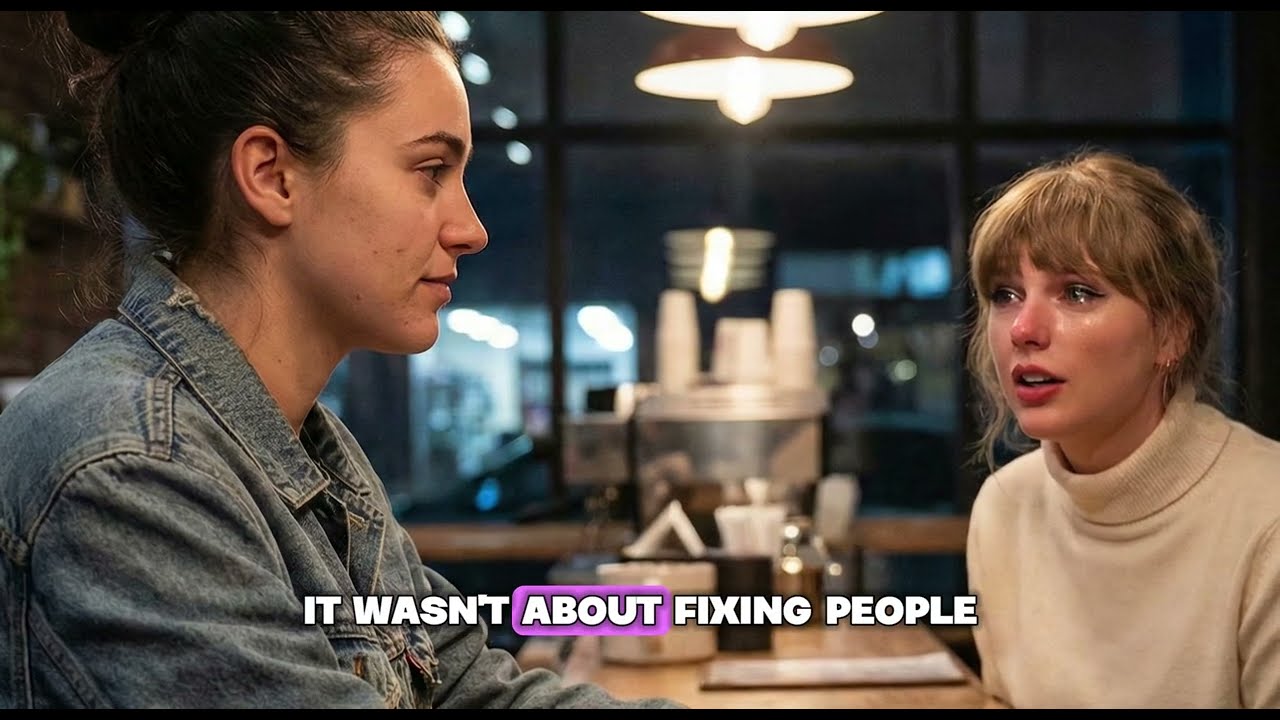
Travis shook his head half laughing in awe. You just turned generosity on its head. And in that moment, something silent passed between them. Not a contract, not a promise, but a covenant. Taylor and Travis weren’t just donors now. They were students again. And Maya, she just handed them the most valuable lesson of their lives.
But the real test was still ahead. Because ideas like this don’t stay in coffee shops. They ripple outward into classrooms, locker rooms, songwriting sessions, and beyond. The encounter ended with a handshake, a quiet thank you, a promise to stay in touch, not for fanfare, but for follow-through. Taylor and Travis left the common grounds just before midnight.
The Kansas City streets were empty. But inside their car, something was stirring. They didn’t post about it. No Instagram story, no paparazzi leak, no celebrity saves student headline because Maya had made one thing crystal clear. This wasn’t about saving anyone. It was about seeing them.
Yet within 72 hours, something began to move just beneath the surface. By Tuesday, Taylor’s team quietly reached out to UMKC’s psychology department, not with a check, but with a question. Is there space for a pilot mentorship initiative focused on resilience through realworld experience? By Thursday, Travis was on a call with a nonprofit that supports first generation college students, asking how to design programming that honors struggle instead of pathizing it.
And by the following weekend, rumors started trickling through campus. Whispers in dorm hallways, mentions in grad student group chats. Did you hear? Swift and Kelsey are funding something new. But it’s not scholarships. It’s different. No press release, no red carpet launch, just a series of closed door meetings and one simple mission.
Help students reframe their challenges as their curriculum. Sources close to the couple later confirmed they permitted significant resources not to erase financial barriers but to build psychological ones. Wait, psychological barriers? Yes, the kind that say you’re behind. You don’t belong. Your stress makes you weak.
This program would flip that script. Trained mentors, many of them former working students themselves, would guide participants to mine their daily grind for insight, empathy, and strength. One adviser described it as therapy meets real life, where your job isn’t a distraction from your education, it’s your education.
Taylor, meanwhile, began weaving the philosophy into her creative process. Friends say her new lyrics shifted from mourning pain to honoring it. From they broke me to this made me. And Travis, he started using Maya’s language in the locker room. Not just push through, but what is this pressure teaching you? The world saw two global icons living their usual high glass lives.
But behind the scenes, a quiet revolution was taking root, one working student at a time. But here’s what no one realized yet. Maya’s idea wasn’t just changing a few lives. It was challenging an entire system, one that still measures success by how little you struggle instead of how meaningfully you grow through it.
You wouldn’t have noticed it on the surface. Taylor was still writing songs. Travis was still catching touchdowns. Life moved on. Headlines, highlights, hype. But something had shifted deep in their core. In her Nashville studio, Taylor began ending writing sessions with a new question. Is this just about pain? Or is it about power forged in pain? She scrapped verses that wallowed, kept the ones that rose, songs that didn’t just say, “I was hurt,” but look what I built from the pieces.
And on the practice field, Travis started doing something unusual. After tough drills, instead of barking, toughen up, he’d ask his teammates, “What did that stress just teach you about yourself?” It wasn’t motivational fluff. It was Maya’s philosophy now lived, not just heard. But the real transformation wasn’t just in them.
It was in how they began to see others. at a charity gallow weeks later. Taylor found herself drawn not to the donors in designer gowns, but to the college students serving canipes, eyes tired, posture proud. She didn’t just leave a tip. She left a note. Your work is your wisdom. Don’t rush to escape it. Travis during a youth football camp pulled aside a teen who’d missed practice to cover his mom’s shift.
Instead of scolding him, he said, “That responsibility, that’s building your character faster than any drill ever could. They weren’t performing empathy. They were practicing it daily, deliberately.” And that’s when it hit them. Maya hadn’t just refused their money. She’d gifted them a new lens. One that sees struggle not as a flaw in someone’s story, but as the forge where their greatest strengths are shaped.
Now they carried that lens everywhere in boardrooms, in songwriting rooms, in locker rooms, and late night drives. Because the truth Maya revealed wasn’t just for psychology students or celebrities. It was for all of us. What if your long hours aren’t stealing your life, but preparing you for your purpose? What if your pressure isn’t punishment, but preparation? Taylor later told a close friend, “I used to think healing meant peace.
Now I know sometimes healing means learning to walk with your scars like their compasses. And Travis, he put it simpler. She taught me that strength isn’t the absence of weight. It’s knowing how to carry it and why. But the most powerful part of this story isn’t what changed for Taylor or Travis. It’s what it invites you to reconsider about your own late nights, your own invisible battles, your own quiet grind.
You wouldn’t have noticed it on the surface. Taylor was still writing songs. Travis was still catching touchdowns. Life moved on. Headlines, highlights, hype. But something had shifted deep in their core. In her Nashville studio, Taylor began ending writing sessions with a new question. Is this just about pain or is it about power forged in pain? She scrapped verses that wallowed, kept the ones that rose.
songs that didn’t just say I was hurt, but look what I’d built from the pieces. And on the practice field, Travis started doing something unusual. After tough drills, instead of barking, toughen up, he’d ask his teammates, “What did that stress just teach you about yourself?” It wasn’t motivational fluff. It was Maya’s philosophy now lived, not just heard.
But the real transformation wasn’t just in them. It was in how they began to see others. At a charity gala weeks later, Taylor found herself drawn not to the donors in designer gowns, but to the college students serving canopes, eyes tired, posture proud. She didn’t just leave a tip. She left a note.
Your work is your wisdom. Don’t rush to escape it. Travis during a youth football camp pulled aside a teen who’d missed practice to cover his mom’s shift. Instead of scolding him, he said, “That responsibility, that’s building your character faster than any drill ever could. They weren’t performing empathy. They were practicing it daily, deliberately.
” And that’s when it hit them. Maya hadn’t just refused their money. She’d gifted them a new lens. One that sees struggle not as a flaw in someone’s story, but as the forge where their greatest strengths are shaped. Now, they carried that lens everywhere. in boardrooms, in songwriting rooms, in locker rooms and late night drives. Because the truth Maya revealed wasn’t just for psychology students or celebrities. It was for all of us.
What if your long hours aren’t stealing your life, but preparing you for your purpose? What if your pressure isn’t punishment, but preparation? Taylor later told a close friend, “I used to think healing meant peace. Now I know sometimes healing means learning to walk with your scars like their compasses. And Travis, he put it simpler.
She taught me that strength isn’t the absence of weight. It’s knowing how to carry it and why. If this story moved you, if it made you look at your own challenges in a new light, please hit subscribe. We don’t just report celebrity news here. We uncover the quiet revolutions happening in diners, dorm rooms, and midnight shifts.
The kind that remind us your struggle has meaning. Even when no one sees it yet. Because the most powerful transformations rarely happen on stages. They happen in silence, in service, in the choice to see your pain not as your end, but as your beginning. But the most powerful part of this story isn’t what changed for Taylor or Travis.
It’s what it invites you to reconsider about your own late nights, your own invisible battles, your own quiet grind. At first, it was just a whisper, then a ripple. Now, it’s becoming a current. Months after that quiet November night in Kansas City, counseling centers at universities across the country began noticing something unusual.
Students weren’t just asking, “How do I make this stress stop?” They were asking, “How do I make it mean something?” Professors in psychology departments started weaving Maya’s concept into their lectures, naming it not as theory, but as lived resilience. One UMKC instructor even created a seminar titled the curriculum of struggle.
Enrollment filled in 48 hours. Mental health advocates took note. Traditional models focused on symptom relief. Understandable, necessary. But MA’s approach offered something deeper. meaning making as medicine. Not just how do I feel better, but what is this trying to teach me? And the shift wasn’t just academic, it was personal.
Mothers working double shifts began journaling not just their exhaustion, but their observations about human nature. Nursing students started seeing their fatigue not as weakness, but as proof of their compassion in action. Even corporate wellness programs began quietly adopting language about growth through pressure, not just stress reduction.
Taylor and Travis never took credit. They didn’t need to because the power of this idea wasn’t in who shared it, but in how deeply it resonated with anyone who’s ever carried more than they thought they could. And that’s why this story matters. Not because it involves famous names, but because it reflects a silent truth so many of us live.
Our hardest seasons aren’t detours from our purpose. They’re the path itself. So, if you’ve ever felt behind, if you’ve ever hidden your struggle out of shame, if you’ve ever wondered whether your grind is for nothing, this story is your reminder. You’re not broken. You’re being built. And if you believe stories like this, real, quiet, worldshifting, deserve to be heard, please tap subscribe.
Because we’re not here to chase clicks. We’re here to uncover the moments that restore your faith in human resilience, one midnight conversation at a time. Because sometimes the most life-changing ideas don’t come from stages or stadiums. They come from someone cleaning an espresso machine at midnight, reminding us all that our struggles aren’t roadblocks.
They’re raw material. And as Maya Angelou once said, “We may encounter many defeats, but we must not be defeated.