Kansas City’s locker room was quiet but not broken. In the aftermath of a close win that left more questions than answers, Chiefs head coach Andy Reid spoke the sort of sentence that both steadies and sharpens a team: “The guys know. They understand we’ve got to clean up a few things. We’ve got to do better as coaches. We’ve got to do better as players. You go back to the drawing board. You don’t quit. We were close here…”
It was a succinct assessment but a meaningful one. Reid’s words did two things at once: they acknowledged that the performance didn’t meet the team’s standards, and they issued a quiet, unmistakable challenge — not to panic, but to act. For fans and analysts, that phrase “back to the drawing board” is familiar. In Reid’s history, drawing boards have produced playoffs and Super Bowl runs. But the coach’s tone this week carried urgency. Close is not enough; consistency is.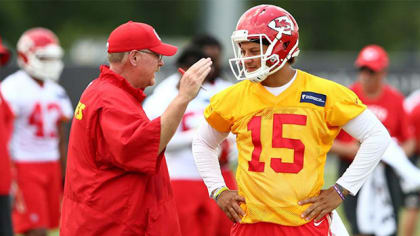
Why does this matter now? The NFL calendar can turn on tiny margins. One missed assignment, one blown coverage, or one poorly timed timeout can flip a win into a loss. Over the course of a season, those small errors compound. Coach Reid, a veteran known for building resilient teams, is reminding everyone of the truth every contender must accept: talent alone won’t carry you through a long season. Execution, cohesion, and coaching clarity do.
Reid’s statement is not finger-pointing. It’s accountability. He included himself in the call to “do better as coaches,” a rare and important admission from someone who has been steering game plans for decades. That line binds leadership and players to the same standard. It says: adjustments will be strategic and systemic, not reactive and blame-filled.
So what are the likely focus areas when the Chiefs return to work?
Cleaning the Margins
Reid’s “clean up a few things” almost certainly points to the little errors that are most costly: penalties at critical moments, miscommunications on the line, and missed reads in the secondary. These are the mistakes that don’t always show up on highlight reels but tilt games. The plan will be to reduce self-inflicted wounds — tightening fundamentals in practice and simplifying assignments so players execute under pressure.
Coaching Clarity
When a head coach says the staff must “do better,” it often signals schematic refinement. That could mean clearer play-calling signals, simplified packages to avoid confusion, or a recalibration of in-game risk. Reid’s experience means he’s unlikely to overhaul his identity. Instead, expect micro-adjustments — game-planning that anticipates opponents’ counters and plays to the Chiefs’ strengths with fewer moving parts in critical moments.
Player Accountability and Roles
Reid’s message puts pressure on veteran leaders and rising stars alike. Who will answer this call? Teams that respond best to this type of wake-up moment have strong internal leadership. The veterans who embody daily standards — being on time, detailed, and relentless — will be asked to reassert that culture. Younger players will be evaluated on how quickly they align.
Mental Reset
Close wins can be deceptive. They feel like progress but can breed complacency. Reid’s framing — “you don’t quit” — is a mental reset designed to convert relief into resolve. The message is simple: stay hungry, and treat every game like a test. Coaches will likely ramp up situational drills and stress-simulation in practice to mimic the pressure of late-game scenarios.
Game-Planning Efficiency
A back-to-the-drawing-board moment often leads to more concise game plans. Rather than introducing complexity, Reid is likely to lean on core strengths — run-pass balance, quick rhythm in the passing game, and defensive assignments that ask less unpredictability from players. That gets everyone focused on winning the basics.
Fans might worry when their team is told to clean up. But there’s a flip side: this is the stage where champions are made. Veteran coaches like Reid use moments like these to refocus the room. He’s not panicking. He’s diagnosing. That’s an advantage. The difficult work now is less glamorous than a halftime rally or a viral press conference, but it’s more important. Repetition, clarity, and hard conversations in practice rooms translate to sharper execution on Sundays.
The Chiefs’ identity has long been built on sustained excellence, a culture of resilience, and the ability to rally. Yet every season is its own story. The league adapts. Opponents study tape and develop counters. Reid’s call to action is a reminder that staying ahead requires continuous improvement. It also acknowledges the human side: coaches and players are tired, distracted, and prone to error — and that’s why a steady, honest reset matters.
How will success be measured in the coming weeks? Fewer penalties in clutch moments. Cleaner third-down defense. Sharper red-zone execution. More consistent clock management and situational awareness. If those metrics improve, fans can expect the Chiefs to reestablish the level of play that makes them a threat in January. If not, Reid’s candid assessment could morph into a season-long conversation about deeper changes.
Finally, this is a test of leadership across the organization. Reid’s words set the tone — accountability, humility, and action. Players will answer in the film room and on the practice field. Coaches will answer with adjustments and clearer messaging. The front office watches, too, knowing that seasons are built from weeks and weeks of small, deliberate corrections.
The coach’s closing thought — “You don’t quit” — is the most important. It’s reassurance to the fanbase and a warning to opponents: this group will fight, adapt, and improve. But it’s also a simple promise: the Chiefs will not settle for “close.” Andy Reid’s message is a challenge to the entire franchise to convert potential into performance, and to make sure the next time they face pressure, they pass the test.
That’s the real takeaway. This is the drawing board moment. The question now is how the Chiefs will draft, redraw, and deliver.